How much should you budget for a professional podcast in the UK? (2026)

A professionally produced business podcast costs £1,350 to £2,500 per episode with an experienced production company like ours. Most providers, ourselves included, offer a discount to businesses that pre-book a season of 6 to 10 episodes, which puts a six-episode season at £7,500 to £14,000 and a ten-episode season between £12,500 and £24,000 for production.
Strategy and planning come first and cost an additional £1,800 to £8,000, depending on how much help you need and what stage you’re at in the process. If you’re already up and running and looking for new producers we’d expect the lower end. If you need help building the show from strategic foundations it will be more. Equipment costs extra, at £100 to £1,000 per microphone kit but this is a one off cost.
In total, a first season starts at around £9,500 and can reach around £34,000 for a large corporate programme built from the ground up and with considerable emphasis on video.
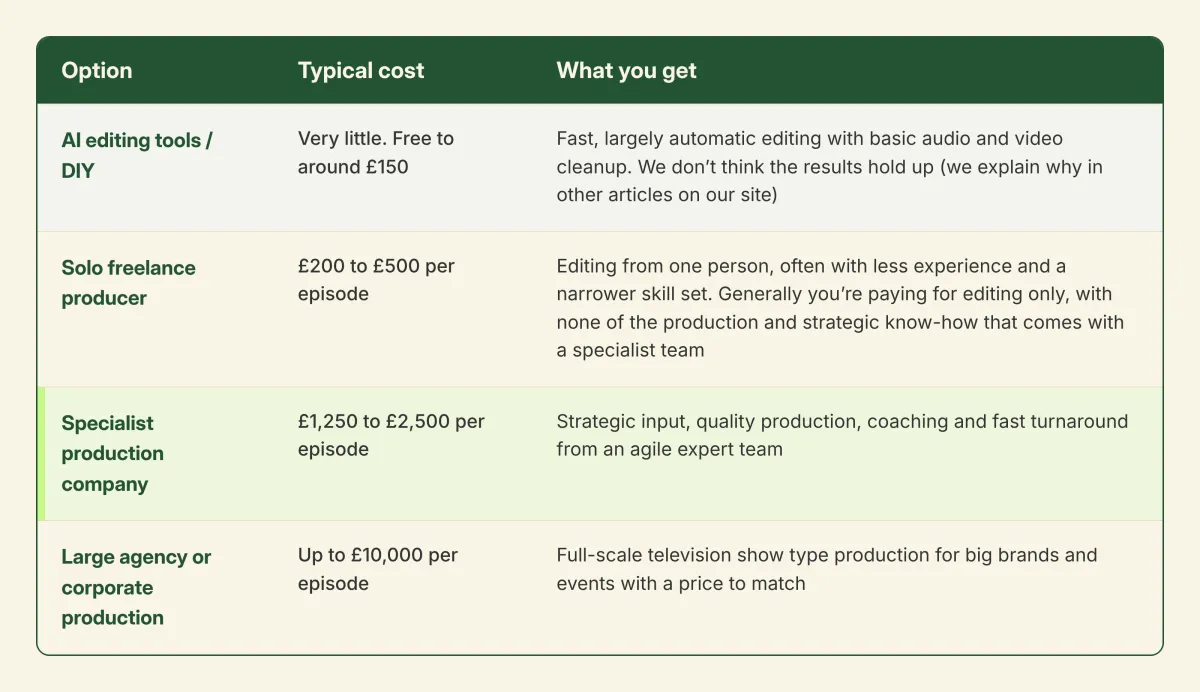
What each option costs
What drives the price?
As you might expect, many factors influence the price per episode. One of the biggest drivers of cost is video. The difference in the required equipment and production effort involved in producing smart, long-form video compared with audio-first is considerable. This is one of the reasons we often recommend clients launch with an audio-first plus supporting video package.
In many cases the benefits of long-form video don’t outweigh the drawbacks. This decision needs to be made on a case by case basis and we always offer honest guidance about which approach is right for your circumstances.
We believe it’s better not to overpromise the audience at launch. Instead we favour building their trust by delivering genuine value consistently, proving the concept works and then building out from there. Read more about the pros and cons of going all in with video podcasting in this blog.
Other factors that have a big influence on cost include:
- The length of your episodes and the complexity of the production and sound design
- How topical your episodes are and how fast they need to be turned around for release
- The number of guests involved on each recording. More voices means a more complex edit, and each person needs to be sent equipment and have it checked before recording
- The number of social media clips required for each episode
- Compliance and sign off: how many rounds of revisions might be needed and how many people will be involved in that process
Why we think in seasons
One episode on its own isn’t much use to anyone. If you’re going to launch a podcast it needs enough of a reason to exist for the audience to invest their time in it, and we believe 6 to 10 episodes is a great place to start. It also makes life easier from a budgeting and planning perspective.
Thinking in seasons breaks down the workload, cost and time commitment into manageable chunks. If it’s going well after season one you can roll on into season two. If you decide to pause, that is still a success: you have delivered the season you set out to do and that content will live on your feed. We call that evergreen content.
How the costs break down
Step one: strategy and planning (£1,800 to £8,000)
The workload is front-loaded. Don’t even think about buying any equipment yet! The best podcasts know exactly who their audience is before they record anything. They also know what the show will cover and why that audience will want to listen. Everything else follows from those two decisions. Getting this stage right can take time, especially if there are lots of ideas and decision makers in the room.
If you arrive with a clear plan, budget at the lower to middle of the scale. An experienced team building on your ideas and developing a strategy before you commit to recording is still an important step because they will notice issues or question preconceptions you might have missed.
If you need help from a blank page, budget towards the top of the scale. £8,000 is rare in our experience, but it is reachable when we build the whole show with you from the ground up with presenters who require quite a bit of coaching to build their hosting skills and confidence behind the microphone. It’s all completely achievable – it just takes time and patience.
Want to test the idea first? Our Podcast Opportunity Appraisal costs £450 and is credited against your project fee if you go ahead within 90 days. You can book that here.
Step two: production (£7,500 to £14,000 for six episodes, £12,500 to £24,000 for ten)
Production costs vary for lots of reasons. The most common factors are the emphasis on video, the amount of supporting content required and the complexity of the episodes in terms of production and sound design.
A professional team understands how much time and craft editing takes and will turn episodes around quickly. The good ones become an extension of your team and answer questions well beyond the edit.
We think the sweet spot sits between the one-person band and the large agency. That is where we work.
Cost wise, an audio-first season with supporting video and minimal coaching would be at the lower end of that scale. If you’re looking to lean into video from the word go and require more production management and coaching support, budget towards the upper end.
One of the key reasons why professional podcast production and management costs more than hiring freelance editors is the work we do around the episodes themselves. Professional services like ours include a lot more involvement before, during and after the recordings to ensure the project is a success. For a specific quote, book a call and we will tell you what your project is likely to cost.
Step three: equipment
Good podcast equipment is affordable now, but it matters more than ever, because poor audio loses listeners in seconds. Budget between £100 for a basic microphone and £1,000 for a top tier mic, stand plus a pair of headphones.
Poorly lit, low resolution video doesn’t tend to gain traction online. If your clips aren’t good enough for people to want to share them, your discovery engine isn’t going to be effective. Expect to add somewhere between a few hundred pounds and a few thousand for video equipment.
If you go for a decent HD webcam and a panel light you can achieve great results at home without big budgets, but it’s easy to end up spending silly money on multiple cameras, lighting and set dressing. Again, our experience at the strategy and planning stage will help you avoid the pitfalls here and get the right result for your project.
Check what your producer includes before you compare quotes. We send microphones to your guests and coach you throughout, both covered in our fee. If another producer leaves those out, add them to their price. There’s no point in your presenters sounding great if every guest turns up talking into a scratchy Zoom call headset sounding awful.
Step four: marketing
Marketing spend is a different ball game altogether and is a huge topic in itself. Fundamentally we believe in creating a great product built on research into what people want to consume and building an organic marketing strategy around that. You can always look to add advertising spend once the product – your podcast – has a body of work online for people to explore.
We’ve done a lot of work on this with clients too, and we know how important it can be, but it’s not strictly part of the podcasting budget so we’ll tackle it in more detail elsewhere. When it comes to spend the sky is the limit, but we’ve also seen major success with very little or sometimes no specific marketing spend at all. What your podcast is about and how you can reach listeners organically usually decide where you should land on this.
Three example budgets
Here is how the numbers come together in some illustrative examples.
Example 1: a clear plan and an audio-first season
You arrive knowing your audience and your show, so strategy and planning sit at the lower end, at around £1,800. You choose an audio-first season of six episodes with supporting video and given previous hosting experience minimal coaching is needed. This puts the production costs at the lower end which is around £7,500. Add one microphone kit per presenter at £100 to £1,000.
Total: around £9,400 to £10,300.
Example 2: a podcast that is already running
A business with a show already in production needed an appraisal to spot issues and identify room for improvement, some consultancy and coaching, new theme music composed, followed by ongoing production. Their first package of six episodes plus all of the ancillary work would come in at around £12,500.
Example 3: a large corporate starting from scratch
A large corporate client are looking to launch a new podcast. Their team are inexperienced in this space so will need quite a lot of support and coaching. Considerable strategic consulting work is needed to develop the ideas and concepts from the ground up. The approach that’s right for them is to launch with an eight-episode package of audio-first podcasts along with supporting video content to promote the show. This project would come in at around at around £27,000.
Can you do it cheaply yourself?
Well yes, you can have a go for sure. But you’ll likely struggle unless you already have the experience and plenty of spare time. There are so many high-quality podcasts in existence now that anything below a certain standard rarely finds an audience. A very low budget works against the goals most businesses have. If you haven’t got the funding available at the moment it might be best to pause the project until you do.
Learning to edit is time consuming and to do it well takes years of practice. Is it really the most efficient use of your time, expertise and creativity to be learning to edit? While editing is an important element, it’s only one link in the chain of a great podcast. Trying to figure out whether your ideas are working for your target audience without any experience is hard. Most people looking to build a house hire an architect and a builder for good reason.
By taking a DIY approach you’re also relying on yourself for everything, and without support the workload and self doubt can soon build up. The opportunity to develop ideas and make use of a professional team’s experience can save you time and effort in the long run. It also makes the process more enjoyable, and if you and your team are enjoying the podcast, your audience is much more likely to, too.
Hidden extra costs
Here are some of the extra costs that should be considered:
- Podcast hosting platform fees. Budget around £20 to £40 a month
- Studio hire for situations where you might want to record with a guest in person. Hire fees in central London start at around £120 per hour for audio with additional cameras on top
- Bespoke theme music composition or licensing of pre-existing tracks. Expect to pay around £2,000 for a bespoke track and sonic branding kit made by our composer
- Visual branding for the show might be £500 for a cover tile up to several thousand for episode specific tiles, social media branding and YouTube thumbnail artwork
- Guest liaison and diary management can take the pressure of your already busy team
- Social media channel posting and management
- Your own internal time. Individuals in your business will need to commit to planning and recording which can require 2 to 4 hours per episode
Why put budget behind a podcast?
More than a quarter of UK adults (27%) listen to podcasts every week, according to Ofcom’s latest data, up from 7% a decade ago. A well-made show puts a human voice behind your brand, builds trust and reaches busy people who listen while they do something else. Long form content, both audio and video, continues to grow in popularity, so we think it’s a great time to make your mark in this space.
“Ultimately it's something of a flagship marketing piece for us because we find it has the best reception of many of our other media pieces. This is fantastic because it means that our customers and businesses are listening in and seeing us as a real innovator, which is really good.”
Podcast budget FAQs
How much does a podcast cost in the UK? A professionally produced business podcast costs £1,350 to £2,500 per episode. A six-episode season costs £7,500 to £14,000 and a ten-episode season costs £12,500 to £24,000, with strategy and planning on top at £1,800 to £8,000.
Can I start a podcast for free? You can start for very little, from free to around £150, using AI editing tools and DIY recording. You’ll likely struggle unless you already have the experience and plenty of spare time, because so many high-quality podcasts exist that anything below a certain standard rarely finds an audience.
How much does podcast editing cost? A solo freelance producer typically charges £200 to £500 per episode, and you’re paying for editing only. A specialist production company charges £1,350 to £2,500 per episode and adds considerable strategic input, ongoing coaching, fast turnaround and equipment hire for guests. The amount of video involved in each case is usually the main driver of higher costs within the quoted fee ranges.
How much does podcast equipment cost? Budget £100 to £1,000 per kit for a microphone, stand and headphones. Video and lighting equipment adds somewhere between a few hundred pounds and a few thousand.
How much does podcast hosting cost? Budget around £20 to £40 a month.
How many episodes should a first season have? We recommend 6 to 10 episodes. It gives your audience enough reason to invest their time and gives you a manageable block of work, cost and time commitment.
Why does a production company cost more than a freelance editor? Primarily because of the work we do around the episodes themselves. A professional service is involved before, during and after the recordings to make sure the project succeeds. You get the benefit of our multiple decades of collective experience in broadcast radio and TV as well as producing podcasts for a wide range of clients.
Plan your podcast budget with us
Tell us who you want to reach and what you want the show to achieve, and we will ask the questions needed to help you arrive at a clear number. Book a strategy call.
"Quietly competent, efficient, creative and reassuring in all circumstances. I couldn't have done this without them and what a pleasure they have made it."

More Articles
How far are we from AI hosted podcasts, and will there be a demand for them?
Will AI take our jobs as podcast hosts?

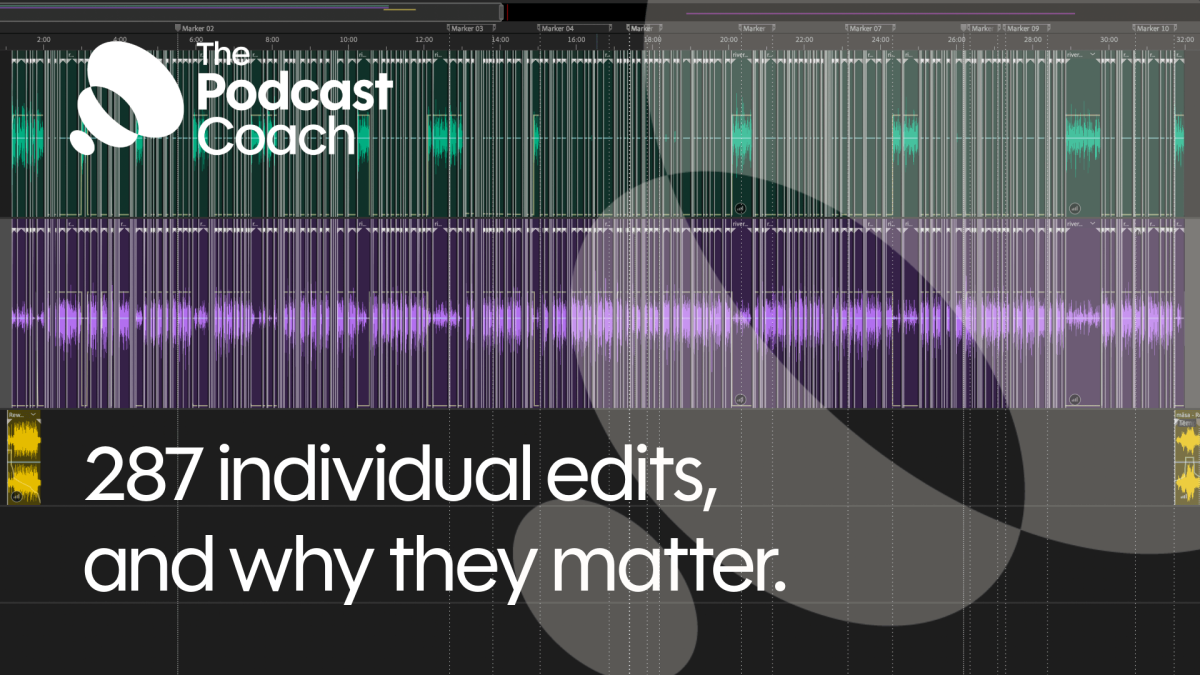
287 edits you will never hear and why they matter
Good editing can turn an average recording into an excellent podcast.
Why great podcast content starts with the angle
The most engaging podcasts develop from identifying the best angle for the story

Should your business start a podcast? A practical guide for leaders
A practical guide for leaders considering launching a podcast

Hosting solo vs co-hosting: what really changes?
How to host a podcast solo or with a co-host
Big agency expertise without the bureaucracy
Why our small, experienced team beats a big agency.