Hosting solo vs co-hosting: what really changes?


Do you host your own podcast, or do you work with a co-host?
Perhaps you’ve got a presentation coming up where you’ll be sharing the stage with someone else, when you’d normally go it alone.
Having spent nearly 20 years in professional radio, I’ve had plenty of experience doing both. And while the differences might seem obvious at first glance, there are some more subtle shifts that can really impact how you prepare and perform.
Recently, I’ve been covering a bit for the very talented Jason King (JK) on the Heart drivetime show, which broadcasts across the whole of England. His usual co-host, the brilliant Kelly Brook, was still on the show, so it was a change from my regular solo programme, which I present Monday to Thursday at 10pm on Heart.
That shift from solo hosting to co-hosting was a timely reminder of just how different these two formats really are.
The big picture differences
When you’re hosting solo, you’re in complete control. You decide how everything starts, develops, and ends. The pacing, the tone, the direction, it’s all on you.
With a co-host, things naturally become less predictable. You’re sharing control, which means giving up a degree of certainty. But in return, you gain something equally valuable: support and those extra special moments that are no doubt harder to come by on your own. There’s also someone there to pick things up, add energy, and have your back when needed.
Preparation: same effort, different focus
Preparation is essential in both scenarios, but the way you prepare shifts significantly.
When you’re on your own, your prep needs to be extremely tight. There’s no safety net. If you forget a question or lose your train of thought, there’s no one to step in and recover the moment. You need to know your material inside out. Winging it is not good enough.
With a co-host, it might be tempting to think you can prepare less but that’s not really the case. The preparation is just different.
Instead of focusing heavily on exact phrasing or your next question or input, you need to be clear on your role within the dynamic. What are you bringing to the conversation? Where are your strengths? Where might your co-host need support?
You also need to anticipate how your co-host might respond in certain situations. The best partnerships come from understanding each other’s rhythms, strengths, and instincts.
During the show: control vs awareness
When you’re hosting solo, this is where your preparation pays off. You trust the work you’ve done and focus on delivering with confidence and clarity.
When you’re co-hosting, your attention is split in a different way. You need to be fully present in the conversation, actively listening and reacting, while also keeping an eye on what’s coming next.
That could mean managing technical elements, guiding the structure of the conversation, or setting up the next segment or question. It’s a constant balance between being in the moment and thinking one step ahead.
Sometimes that means prepping how you’re going to react to something that may or may not come up. For example, during a show with Kelly Brook the Friday before the London Marathon, I knew that the producer and Kelly had both previously run the marathon, so I prepped how I was going to react when asked if I’d ever run it before. I wanted it to be a reaction that felt natural, but not the bog standard ‘no I haven’t and now you’re making me feel bad’ response. So, the link (talky bit) came where we’d planned to chat to listeners who were running and low and behold, Kelly fired the question at me “ever run 26.2 miles Ben?”. My time came to pause, allow a moment of powerful silence to sit, then completely ignore Kelly and go to caller Jon, all done with a smirk of course. Which got a laugh, thankfully!
A key principle: don’t over-script
One of the most important pieces of advice especially when working with a co-host is to avoid scripting everything. This will kill a performance.
Your goal should be to work from bullet points rather than a full script. There may be a few key sections that need precise wording, but beyond that, flexibility is where the magic happens.
In fact, this matters even more in a co-hosted environment. Over-scripting can strip away spontaneity, and that’s often where the best moments come from.
If you think about the standout moments from any great show or podcast, they’re never the scripted lines. They’re the unexpected, natural exchanges that couldn’t have been planned.
Final thoughts
Whether you’re hosting solo or working with a co-host, preparation is non-negotiable. The key is making sure your preparation matches the format.
Do the work in advance, then trust it when it’s time to go live, whether that’s on air, on stage, or in a podcast studio.
When you trust your preparation, you give yourself the freedom to enjoy the experience. And when you’re enjoying it, your audience feels that too.
If you’d like to take your presentation or hosting skills to the next level, feel free to get in touch for more information.

More Articles
How far are we from AI hosted podcasts, and will there be a demand for them?
Will AI take our jobs as podcast hosts?
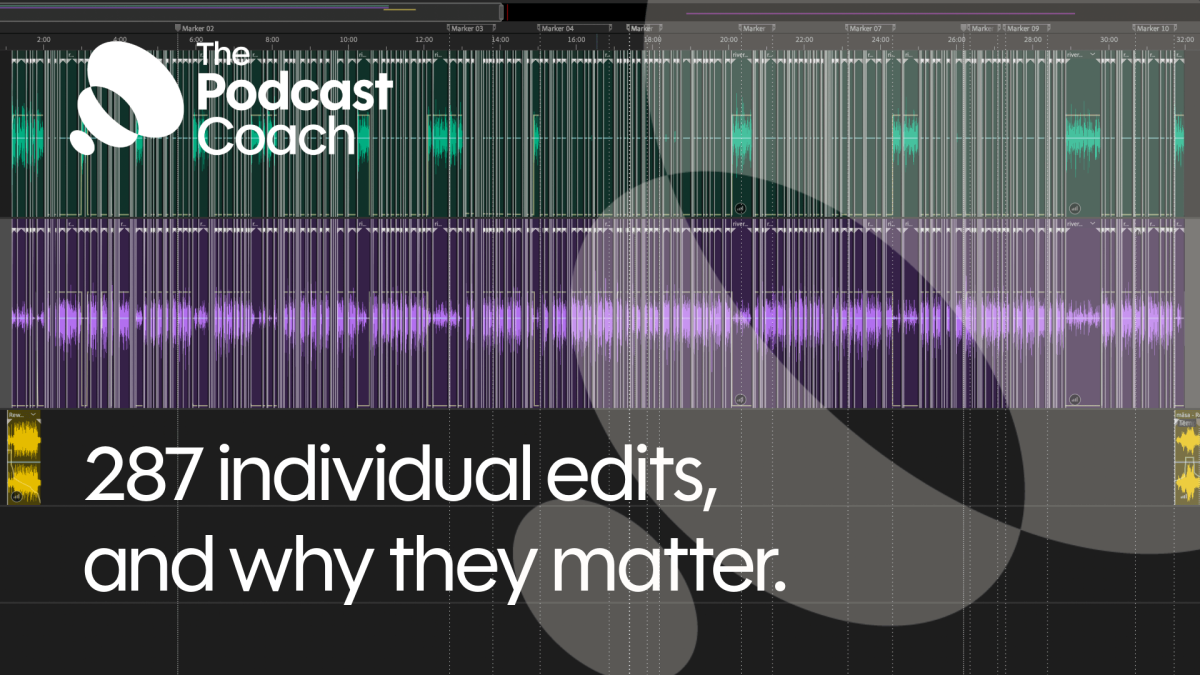
287 edits you will never hear and why they matter
Good editing can turn an average recording into an excellent podcast.

Why great podcast content starts with the angle
The most engaging podcasts develop from identifying the best angle for the story


Should your business start a podcast? A practical guide for leaders
A practical guide for leaders considering launching a podcast
Big agency expertise without the bureaucracy
Why our small, experienced team beats a big agency.
Why every business podcast needs a regular “listen back”
Creating a great podcast doesn't end when you stop recording