Should your business start a podcast? A practical guide for leaders

Firstly, the short answer:
A podcast is worth doing if you have something worth saying, a defined audience, and a team who can commit to it for a reasonable length of time. Get the strategy right before you record anything and a series-based approach, not an open-ended commitment, is the safest way to start.
A podcast isn't automatically a good idea for every business. Podcasting makes most sense when you have something worth saying, a defined audience and a reason for that audience to keep listening. This guide works through what you need to figure out before you commit, because getting it right at the start saves time, money and frustration later.
Should my business start a podcast in 2027, and what are the benefits?
Yes, if you can commit to developing a clear strategy and consistent production. There are millions of podcasts already out there, but most are inactive, severely lacking in quality or built without a clear audience. So there's still plenty of room in the market.
A business podcast connects you with a key audience, builds trust in your brand and team, and provides a platform on which to position yourselves as thought leaders in your sector. It also opens the door to relationships with partner organisations, potential clients and customers.
One of the FTSE 250 clients we produce a podcast for told us their long-running monthly show is a “flagship marketing piece for us because we find it has the best reception of many of our other media pieces”.
To make podcasting worthwhile you need a considered strategy, a real commitment of time for recording and promotion, and a reasonable budget for quality production. Research your niche, build a team with the enthusiasm and capacity to see it through, and make sure marketing and comms are on board to help you promote it.
Do we need to commit to producing a podcast indefinitely?
No. We recommend starting with a series.
Releasing a quality run of 6 to 10 episodes, with the option to continue or stop there, is a more reasonable commitment for most businesses. Either outcome counts as a success. If the topics are fundamental to your business, the episodes stay relevant months or years later.
Working series by series also avoids over-promising the audience an indefinite run, so stopping doesn't feel like a failure. It focuses the planning and production process on what brings long-term value, and you can always commission another season later. There's no fixed rule here.
How can a podcast build trust?
By showing up consistently and delivering on what you promised the listener, episode after episode.
Good business podcasts are never about selling. They demonstrate knowledge and expertise, add value, and give you space to explain your thinking and build relationships with contributors and listeners. Your audience gets to know you and your team: how you think, what you believe, how you work. By the time someone contacts your company, they already feel like they know you and how you'll handle their needs, which makes the next stage of that relationship far easier. That's earned trust, built one episode at a time.
We've recently begun some work with a financial services organisation whose podcast has run for almost a decade, an impressive achievement in itself, but they've lost their way by adding more and more elements to the show. The result doesn't serve any of their audiences particularly well.
As one listener put it in the comments, the genuinely useful material didn't start until nearly halfway through the episode. Nothing wrong with the earlier content, but it dated quickly and didn't answer the question the title promised.
When shouldn't you start a podcast?
Don't start until you know who it's for and who owns it inside the business.
If there's no one championing and driving the podcast forward internally, it will almost certainly lose momentum. Don't expect immediate results either; podcasting takes time and consistency, and a single season with more ideas already spilling into a second one is a good sign you've got something worth pursuing.
If you haven't got enough material to sustain the idea, or can't invest both time and money in preparation and production, hold off. A substandard launch does nothing for you at best, and can damage your reputation at worst.
Getting it right from the start isn't optional.
What makes a successful business podcast?
Whether people acted on what they heard, not how many downloads you got.
Download numbers are usually a poor measure of success for a business podcast. The better question isn't "how many people listened?" but "who listened, what did they get from it, and what did it help us achieve?" Audio's strength is its ability to hold attention over long stretches and build a real sense of relationship with a listener, warming up stakeholders, partners and customers in a way other formats rarely manage.
Picture a few hundred people who genuinely value what you do, showing up every couple of weeks to hear you talk for half an hour. That's a more valuable position of influence than a few thousand people scrolling past your advert in a feed.
How do we make our podcast stand out?
By serving an underserved audience, or by playing an already-crowded field better than your competitors.
Analysing the competition and working out what sets you apart is a core part of the scoping work we do with a client. Think about the expertise you bring, your organisation's unique positioning, and how you differentiate from others in the space, then build that into the show itself. Doing this feeds back into brand identity and the trust you're trying to build with listeners.
Is podcasting better than video for thought leadership?
It's not an either/or choice. For most businesses, an audio-first podcast supported by video is the strongest approach.
How hard you lean into video should be led by the content, not the other way round.
Don't make boring TV at the expense of good audio.
Audio offers more intimacy, is cheaper and simpler to produce, and travels with the listener in a way video can't. You can't watch while running or driving.
Video still matters for discovery on platforms like YouTube and LinkedIn, and people often find a podcast through a short video clip on social media before moving to the audio platform for the full episode. Most of the time we recommend treating video as an important, but secondary element. Record it along with the audio, cut engaging clips with good b-roll, and use those clips to drive people to the full podcast, where the relationship between your content and the listener actually has room to grow.
What are the key ingredients to a successful podcast?
We call this the Purpose, Connection, Quality framework, and a great podcast needs all three:
- Purpose - know why the show exists and who it's for before you record anything. Make sure every episode is planned so it has a structure and value built in.
- Connection - give the listener a reason to stay to the end, come back for a future episode, and take a next step, whether that's joining a newsletter or contacting your business. Speak to the listener directly with one-to-one language, and show up consistently in both schedule and value.
- Quality - set the bar high from episode one. Protect it with proper prep, the right equipment for your format, and a strong post-production process. A good edit turns an okay interview into a compelling, well-paced podcast.
Without purpose, a podcast has no reason to exist. Without connection, no one stays. Without quality, the listener switches off before the other two get a chance to prove themselves.
We've built a short assessment that helps leaders, comms and marketing teams work through exactly this. It takes three minutes and you get an honest result with no pitch.

More Articles
How far are we from AI hosted podcasts, and will there be a demand for them?
Will AI take our jobs as podcast hosts?

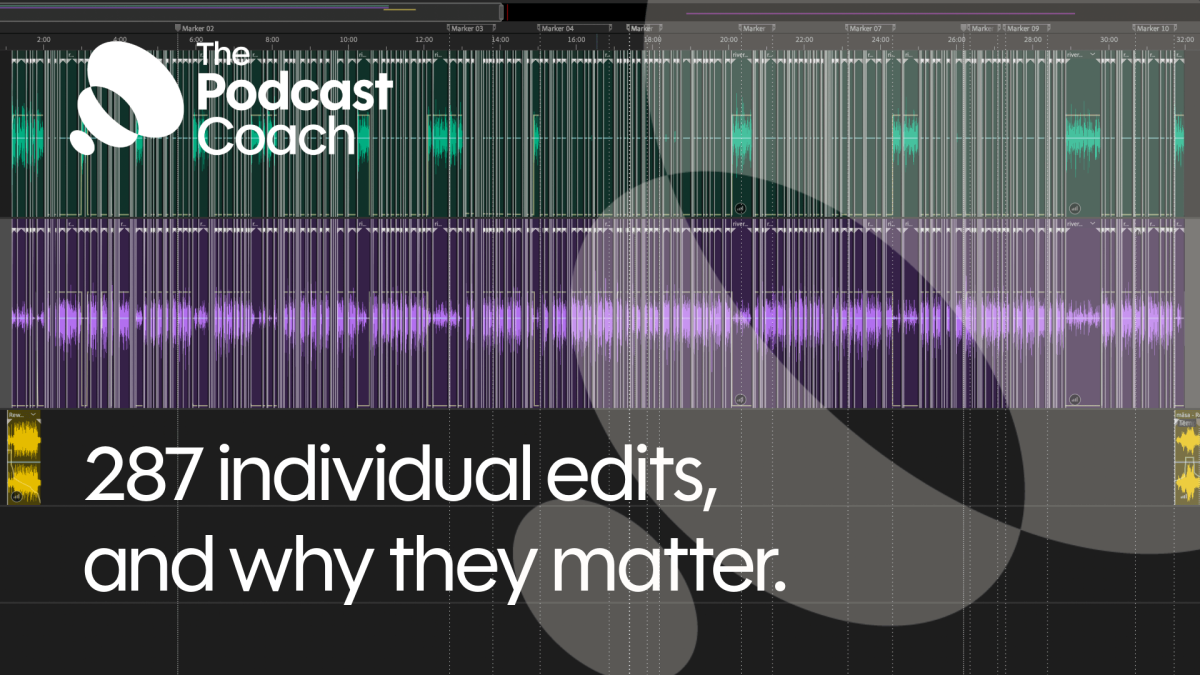
287 edits you will never hear and why they matter
Good editing can turn an average recording into an excellent podcast.
Why great podcast content starts with the angle
The most engaging podcasts develop from identifying the best angle for the story


Hosting solo vs co-hosting: what really changes?
How to host a podcast solo or with a co-host
Big agency expertise without the bureaucracy
Why our small, experienced team beats a big agency.
Why every business podcast needs a regular “listen back”
Creating a great podcast doesn't end when you stop recording